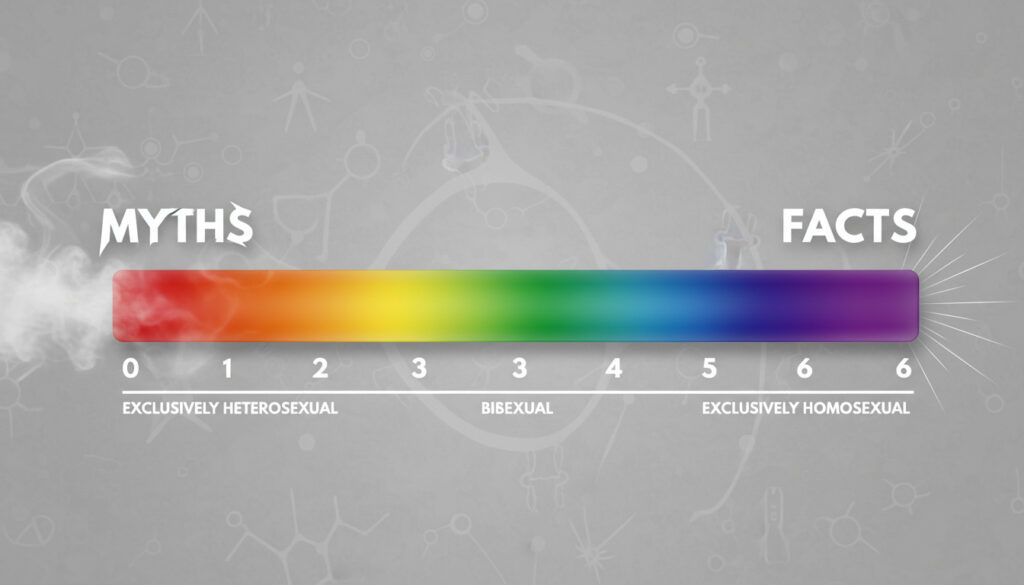
Am I Gay Test – Kinsey Scale Myths and Facts
Millions of people search for clarity about their sexual orientation through online self-assessments each year. The “Am I Gay” test phenomenon represents a digital evolution of historical research into human sexuality, offering private reflection tools that range from simple checklists to sophisticated algorithms based on decades-old psychological frameworks. While these quizzes provide immediate feedback, they exist within a complex landscape where scientific understanding continues to evolve beyond binary categories.
These digital instruments draw heavily from Alfred Kinsey’s landmark research conducted during the 1940s and 1950s, which first established sexuality as a spectrum rather than an either/or proposition. Modern adaptations attempt to quantify attractions, fantasies, and emotional bonds through multiple-choice questions, yet they inherit significant limitations from their mid-century origins.
Understanding what these tests can and cannot reveal requires examining their historical foundations, psychological validity, and the inherent fluidity of human attraction. This guide explores the mechanics of contemporary sexuality quizzes, separates established facts from persistent myths, and provides context for interpreting results without definitive labels.
How Do I Know If I’m Gay? Take This Quiz
| What Digital self-assessment based on attraction patterns |
Reliability Exploratory only; not clinically diagnostic |
Best For Private reflection and initial exploration |
Alternatives Licensed therapy, Kinsey Scale interviews |
- Sexuality exists on a continuum from 0 (exclusively heterosexual) to 6 (exclusively homosexual), with intermediate ratings possible.
- The original Kinsey Scale emerged from thousands of face-to-face interviews, not automated questionnaires.
- Contemporary online quizzes typically use 24-question formats weighing erotic, romantic, and social attractions.
- Self-reported attraction patterns frequently diverge from documented sexual behaviors.
- No medical or psychological instrument can definitively “diagnose” sexual orientation.
- Results serve as starting points for reflection rather than permanent labels.
- Professional therapy offers nuanced exploration that standardized quizzes cannot provide.
| Myth | Fact | Source Basis |
|---|---|---|
| Tests confirm absolute gay or straight identity | Sexuality operates on a spectrum with most falling between extremes | Kinsey Research |
| Same-sex thoughts definitively indicate homosexuality | Incidental attractions are common, corresponding to Kinsey ratings 1-2 | Clinical Studies |
| Sexual orientation is consciously chosen | Patterns represent stable characteristics, though experiences vary | APA Guidelines |
| Online quizzes provide medical diagnoses | Tools serve exploratory purposes only | Psychology Consensus |
| Binary categories encompass all experiences | Middle positions (2-4) represent significant population segments | Kinsey Data |
| Results remain constant throughout life | Attraction patterns can shift across different time periods and contexts | Longitudinal Analysis |
Free online tools such as those found at specialized assessment sites offer immediate results but lack the diagnostic rigor of clinical interviews.
What Are the Common Signs You’re Gay?
Psychology recognizes no universal checklist for sexual orientation. Attraction operates through complex interactions of physical response, romantic longing, and emotional connection that resist standardized measurement. Research indicates that many individuals experience same-sex attractions or fantasies while maintaining primary heterosexual relationships, complicating simple categorization.
Variations in Male Experience
Men questioning their orientation often report patterns of same-sex fantasies or emotional bonds that persist over time. However, studies demonstrate that behavioral history alone proves unreliable; men with extensive same-sex sexual histories sometimes self-rate as predominantly heterosexual on scales.
Variations in Female Experience
Women frequently encounter fluid attraction patterns that shift based on emotional intimacy rather than purely physical criteria. This phenomenon complicates binary test results, as female sexuality often demonstrates greater contextual flexibility than male counterparts in longitudinal studies.
No validated inventory exists that can definitively determine sexual orientation through behavioral checklists. Assessment requires consideration of fantasies, romantic attachments, and social preferences that evolve across individual lifespans.
Research published in Psychology Today indicates that “mostly straight” individuals may share subtle traits with gay people while maintaining predominant heterosexual alignment.
Can You Be Straight But Have Gay Thoughts?
Sexual orientation rarely conforms to rigid categories. The concept of being “mostly straight” describes individuals who experience subtle same-sex attractions while maintaining predominant heterosexual alignment. These nuanced positions occupied significant portions of Kinsey’s original samples.
Positioning on the Spectrum
Kinsey ratings between 1 and 2 represent predominantly heterosexual individuals with incidental homosexual elements. These positions are normal variants rather than transitional states or denial mechanisms. The scale explicitly acknowledges that exclusive heterosexuality or homosexuality proves relatively rare in the general population.
Bisexual Identification
Ratings between 2 and 4 on the Kinsey scale indicate bisexual or bi-romantic orientations. This middle spectrum represents a stable identity for many, distinct from transitional phases between straight and gay identities. While introspection demands focus, external events such as Is Liverpool Playing Today – Next FA Cup Match Details occasionally provide temporary respite from intensive identity questioning, though they cannot substitute for genuine self-exploration.
A 2014 analysis by James Weinrich confirmed that Kinsey’s original methods relied on interviews rather than self-tests, revealing persistent gaps between reported behaviors and self-identified ratings.
Are Am I Gay Tests Accurate and Reliable?
The accuracy of online sexuality tests remains limited by their historical foundations and methodological constraints. Contemporary quizzes derived from Kinsey’s work inherit biases from 1940s and 1950s research samples that lacked diversity in terms of non-binary identities and asexual spectrum experiences.
Foundations in Kinsey Research
Alfred Kinsey’s original methodology relied on thousands of in-depth interviews conducted by trained researchers, not self-administered digital questionnaires. The Kinsey Scale assigns ratings from 0 (exclusively heterosexual) to 6 (exclusively homosexual), with an “X” category for no socio-sexual contacts. Online adaptations attempt to replicate this spectrum through algorithmic scoring but lack the nuanced follow-up questioning that characterized Kinsey’s approach.
Kinsey’s team published Sexual Behavior in the Human Male in 1948 and Sexual Behavior in the Human Female in 1953, interviewing over 10,000 subjects. Modern quizzes compress this complex interview process into minutes-long assessments without clinical validation.
Contemporary Limitations
Current online assessments based on the Kinsey framework emphasize sexual behavior over identity formation. Research by James Weinrich in 2014 confirmed that Kinsey’s methods relied on detailed interviewing rather than simple scoring, highlighting discrepancies where men with extensive same-sex experiences rated themselves as 0-2 on the scale.
Tests based on mid-20th century frameworks do not fully account for non-binary gender identities, asexual spectrum experiences, or distinct cultural expressions of sexuality that fall outside the original 0-6 spectrum parameters.
How Did Sexual Orientation Testing Develop?
- : Alfred Kinsey publishes Sexual Behavior in the Human Male, introducing the 0-6 scale based on extensive interviews with thousands of subjects.
- : Release of Sexual Behavior in the Human Female expands the research sample and confirms spectrum patterns across genders.
- : Fritz Klein develops the Klein Sexual Orientation Grid (KSOG), assessing seven variables (including attraction, behavior, and fantasies) across past, present, and ideal timelines.
- : Analysis by James Weinrich quantifies discrepancies between self-reported Kinsey ratings and documented sexual histories.
- : Digital platforms democratize access to sexuality assessments, though these lack the clinical validation of their research predecessors.
What Can Am I Gay Tests Actually Confirm?
Scientific consensus establishes certain parameters regarding sexual orientation assessment, while significant questions remain unresolved by current testing methodologies.
| Established Understanding | Persistent Unknowns |
|---|---|
| Sexuality exists on a spectrum (Kinsey 0-6) with most individuals falling between exclusive categories | Precise neurological or genetic markers that determine orientation |
| Attraction encompasses physical, romantic, and emotional dimensions that vary independently | Whether childhood indicators reliably predict adult orientation patterns |
| “Mostly straight” identities represent valid positions with varying degrees of same-sex attraction | Standardized scores that translate accurately across different cultures and generations |
| Sexual orientation typically represents a stable pattern rather than a chosen lifestyle | The degree to which fluidity represents situational response versus inherent trait |
Why Do People Question Their Sexuality?
Privacy drives much of the appeal behind online sexuality tests. These tools allow exploration without immediate social exposure or professional consultation. For many, particularly in environments where LGBTQ+ identities face stigma, quizzes offer a low-risk entry point to identity consideration.
The search for validation also motivates test-taking. Individuals experiencing same-sex attractions may seek external confirmation that their feelings fall within normal human variation. The anonymous nature of online assessments reduces barriers to honest self-reporting that might occur in face-to-face clinical settings.
Cultural shifts toward spectrum-based understanding have increased comfort with questioning previously assumed heterosexuality. As social frameworks expand beyond binary definitions, more individuals feel empowered to explore identities that previously remained unacknowledged or pathologized.
What Do Experts Say About These Assessments?
The American Psychological Association recognizes sexual orientation as an enduring pattern of attraction, though potentially fluid throughout the lifespan. Clinical consensus holds that no therapeutic intervention can change orientation, and that self-identification carries more weight than test categorization.
Research from the Kinsey Institute legacy demonstrates that exclusive heterosexuality or homosexuality remains relatively rare. Most individuals occupy intermediate positions on the spectrum, reporting varying degrees of same-sex and opposite-sex attractions across their lifetimes.
Modern practitioners emphasize that tools like the Klein Sexual Orientation Grid provide more nuanced assessment than simple linear scales by evaluating multiple dimensions across different time periods. However, even these comprehensive instruments serve exploratory rather than diagnostic functions.
Should You Take an Am I Gay Test?
Online sexuality quizzes offer accessible starting points for private reflection, particularly for those unprepared to discuss questions with professionals or peers. While these tools cannot replace therapy or definitive self-knowledge, they normalize the spectrum nature of human attraction and provide language for complex experiences. Individuals seeking deeper clarity should consult licensed mental health providers who can address identity exploration within appropriate clinical contexts. For those interested in linguistic structures while contemplating identity, What Is a Fronted Adverbial – Definition, Examples & KS2 Guide offers a completely different analytical framework.
Frequently Asked Questions
What should I do if my test results indicate I’m gay?
Consider the results as one data point in a broader self-reflection process. Consult LGBTQ+ affirmative therapists or trusted community organizations for support. Remember that online quizzes provide suggestions, not definitive diagnoses or life mandates.
Is there a specific gay test designed for women?
Most online quizzes accommodate all genders, though some platforms offer gender-specific variations. The underlying psychological principles remain consistent, focusing on patterns of attraction rather than gender-specific behaviors.
How accurate is the Kinsey Scale by modern standards?
The scale remains historically significant but methodologically dated. It emphasizes behavior over identity, excludes non-binary experiences, and relies on mid-20th century samples. Contemporary researchers prefer multidimensional tools like the Klein Sexual Orientation Grid.
Can sexuality change over time?
Research indicates that while core orientation patterns tend toward stability, specific attractions and behavioral expressions can shift across different life stages and contexts. This fluidity represents normal human variation rather than inconsistency.
Do same-sex fantasies mean I am gay?
Not necessarily. Many predominantly heterosexual individuals experience occasional same-sex thoughts or fantasies. Kinsey ratings of 1-2 specifically describe this pattern as common and falling within the heterosexual range with incidental homosexual elements.
Are these tests confidential?
Reputable online quizzes do not require identifying information, though data practices vary by site. Avoid tests demanding personal details or payment for basic results. True anonymity requires caution regarding cookies and digital footprints.
More related posts
 Shepherds Hut with Hot Tub – UK Guide to Top Locations
 Scotland National Football Team Standings – 2024 Nations League Table
 The Inn Collection Group – Complete Guide to Locations and Offers
 Kirk Douglas – Biography, Cause of Death and Lasting Legacy
 Spitfire Crash West Hythe – Engine Failure Forces Gear-Up Landing
 Attendance Allowance Claim Form – Step-by-Step UK Guide
 How Old Is Andy Murray – 2025 Biography and Career Facts
