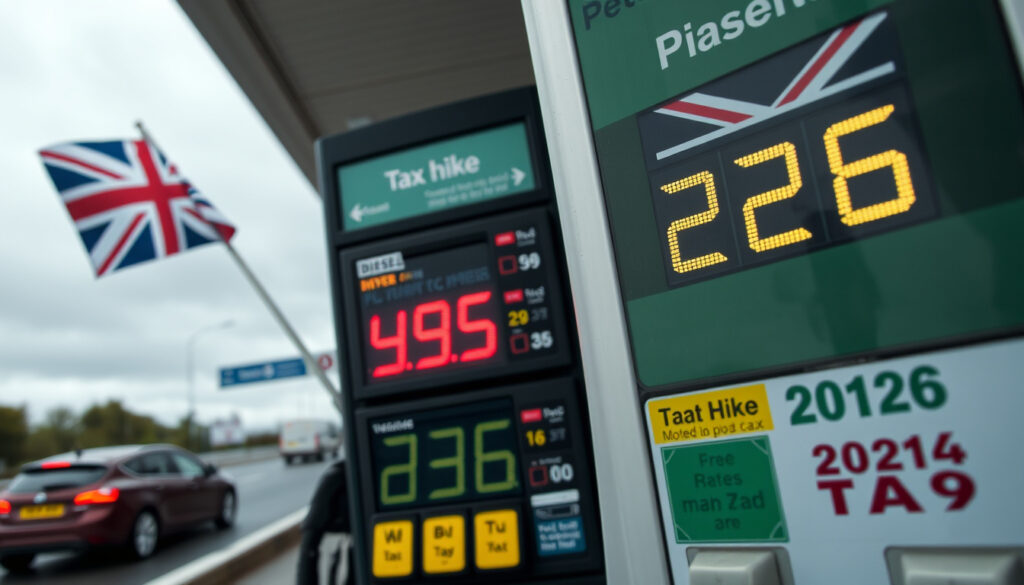
Petrol Diesel Tax Hikes – UK Road Tax Changes 2026 Guide
Motorists across the United Kingdom face a significant shift in vehicle taxation from April 1, 2026, as Chancellor Rachel Reeves’ 2025 Autumn Budget takes effect. Vehicle Excise Duty, commonly known as road tax, will rise for petrol and diesel cars, with the standard annual rate climbing from £195 to £200 for post-April 2017 vehicles.
The changes represent the most substantial overhaul of motor taxation in years, designed to penalise high-emission vehicles while inflation-linked increases affect nearly all registered cars. Alongside road tax adjustments, fuel duty increases are being phased in gradually to avoid an immediate shock at the pumps. Drivers should understand how these combined changes will affect their annual running costs.
This guide breaks down the exact rates, affected vehicle categories, and practical steps drivers can take to calculate their new tax obligations using official government tools.
What are the car tax changes in 2026?
The 2026 road tax changes stem from Chancellor Rachel Reeves’ 2025 Autumn Budget, which introduced inflation-linked increases to Vehicle Excise Duty alongside new CO₂-based banding. These adjustments apply UK-wide through the DVLA and gov.uk systems, affecting virtually every driver with a petrol, diesel, or hybrid vehicle registered after March 2001. The chancellor’s fiscal plans were outlined in detail by The Guardian following the budget announcement.
Key impacts across vehicle categories
- Post-2017 vehicles: standard annual rate rises from £195 to £200, or £210 via 12-month direct debit
- Expensive Car Supplement: additional £425 annually for 5 years on vehicles with £40,000+ list price
- Electric vehicles: exemption from standard rate but luxury levy threshold rises from £40,000 to £50,000
- Pre-2017 cars: inflation-linked increases averaging £5, reaching £40 for higher emitters
- First-year tax: high CO₂ vehicles (>255 g/km) face charges up to £5,490 plus supplements
- Heavy Goods Vehicles: VED hikes exceed £2,000 annually for the largest commercial vehicles
- RDE2 compliance: certain diesel vehicles meeting real-driving emissions standards retain lower rates
VED rates comparison: pre-2026 vs 2026
| Vehicle Type | Pre-2026 Rate | 2026 Rate | Increase |
|---|---|---|---|
| Post-April 2017 (standard) | £195/year | £200/year | £5 |
| Pre-2017: CO₂ 121-130 g/km | £165/year | £170/year | £5 |
| Pre-2017: CO₂ 131-140 g/km | £195/year | £200/year | £5 |
| Pre-2017: CO₂ 141-150 g/km | £215/year | £225/year | £10 |
| Pre-2017: CO₂ 226-255 g/km | £735/year | £760/year | £25 |
| Pre-2017: CO₂ over 255 g/km | £750/year | £790/year | £40 |
| Luxury surcharge (£40,000+) | £425/year | £425/year | £0 |
| Luxury EV (new threshold) | £425/year | £425/year | £0 |
The official rates are detailed in the GOV.UK V149 document for cars, motorcycles, and light goods vehicles from April 1, 2026.
How will petrol and diesel tax hikes affect drivers?
Beyond road tax, fuel duty on petrol and diesel will also increase gradually after remaining frozen since 2022. The government extended the 5p per litre cut through August 31, 2026, before implementing a phased reversal designed to return duty to pre-2022 levels by March 2027. The BBC’s economic coverage has tracked how these fiscal measures fit into the broader economic strategy.
Fuel duty phased increase timeline
- April 1, 2026: No immediate change; 5p cut remains in place
- September 1, 2026: +1p per litre (diesel rises to 53.95p per litre)
- December 1, 2026: +2p per litre added
- March 1, 2027: +2p per litre (returns to pre-2022 levels)
Once fully implemented, UK petrol duty will reach approximately 58p per litre, maintaining the country’s position as having the eighth-highest fuel duty in the European Union. The phased approach was chosen specifically to ease pressure on commuters and avoid sudden price spikes at filling stations.
Chancellor Rachel Reeves cited commuter costs as a key consideration in staging the fuel duty increases. A new Fuel Finder app was introduced alongside the changes to help drivers locate the most competitive prices in their area.
Combined cost impact on motorists
When road tax increases and fuel duty rises are combined with global crude oil prices driven by Middle East tensions, the overall cost of motoring in the UK is set to rise significantly through 2026 and 2027. Heavy Goods Vehicle operators face the steepest increases, with annual VED bills surpassing £2,000 for the largest trucks.
The dual pressure of annual vehicle taxation and pump prices creates a cumulative burden for drivers who rely on their cars for daily commutes. Families with multiple vehicles or longer commutes will feel the impact most acutely, particularly those unable to transition to electric alternatives.
How much is my road tax?
Calculating your exact road tax liability requires understanding which tax band applies to your vehicle. The DVLA determines banding based on your vehicle’s CO₂ emissions level and registration date, with different systems applying to cars registered before and after April 2017.
Understanding your tax band
For vehicles registered after April 1, 2017, the system is straightforward: a standard rate applies to most petrol and diesel cars, with surcharges for vehicles exceeding £40,000 list price or producing high first-year emissions. Electric vehicles remain exempt from the standard rate but lose this exemption once they enter the luxury threshold at £50,000.
Pre-2017 vehicles follow a more complex graduated band structure tied directly to CO₂ emissions. Vehicles emitting 100g/km or less currently pay £20 annually, while those exceeding 255g/km face charges approaching £790 per year. The new rates increase each band by varying amounts, with higher emitters seeing proportionally larger hikes.
Enter your vehicle’s registration number on the official DVLA calculator at gov.uk/check-vehicle-tax to receive a personalised quote based on your specific vehicle and circumstances.
Factors that affect your road tax amount
- Vehicle registration date (determines which tax system applies)
- CO₂ emissions figure (for pre-2017 vehicles)
- List price for luxury surcharge calculations
- Fuel type (affects diesel surcharges in some bands)
- RDE2 certification status for certain diesel vehicles
- Vehicle use class (standard vs disabled taxation)
How to use a road tax calculator by reg?
The most accurate way to determine your vehicle tax is through the DVLA’s official online calculator, which accesses current vehicle records directly. This tool eliminates guesswork by pulling data associated with your specific registration number.
Using the DVLA vehicle tax calculator
- Visit gov.uk/check-vehicle-tax
- Enter your vehicle’s registration number (number plate)
- Confirm your vehicle make and model when prompted
- Review the displayed tax rate, band, and expiry date
- Proceed to tax your vehicle or make payments as needed
The calculator handles vehicles registered from March 2001 onwards, covering the vast majority of cars currently on UK roads. It provides information on both the annual rate and any first-year tax applicable at the point of registration.
Road tax can be paid annually, six-monthly, or via 12-month direct debit. While the six-month option costs £110 and direct debit costs £210 annually, these are not savings schemes—the total annual amount remains £200 plus any applicable supplements.
Alternative calculation methods
For vehicles registered before March 2001, or when online access is unavailable, drivers can consult the V149 rates document or contact the DVLA directly. The GOV.UK fuel duty rates publication provides detailed tables for commercial vehicles and specialist classifications.
Insurance and finance companies often provide free vehicle data queries that include tax band information, which can serve as a secondary verification method. However, the DVLA calculator remains the authoritative source for tax calculations.
When do the 2026 tax changes take effect?
The phased implementation of motoring taxation changes means different aspects of the 2026 reforms take effect at specific dates throughout the year. Understanding this timeline helps drivers plan their finances and consider whether to act before certain thresholds kick in.
- Autumn Budget 2025: Chancellor Rachel Reeves announces overhaul of motor taxation through the Autumn Budget, setting the framework for April 2026 changes
- April 1, 2026: VED rate increases take effect for all new and renewal vehicle taxations; fuel duty cut remains in place
- August 31, 2026: Final date of the extended 5p per litre fuel duty cut
- September 1, 2026: First fuel duty increase of 1p per litre takes effect
- December 1, 2026: Second fuel duty increase of 2p per litre
- March 1, 2027: Final fuel duty increase of 2p per litre returns duty to pre-2022 levels
This extended timeline reflects the government’s approach to balancing environmental objectives with household affordability concerns. The gradual nature of fuel duty increases gives drivers time to adjust their budgets and, potentially, consider alternatives to high-emission vehicles.
What’s confirmed and what’s still unclear?
| Established Information | Information Requiring Verification |
|---|---|
| Standard VED rate rises to £200 from April 1, 2026 | Precise band adjustments for specific marginal vehicles |
| Luxury threshold for EVs moves to £50,000 | Exact processing times for online tax renewals |
| Fuel duty increases phased September 2026 through March 2027 | Regional variations in implementation processing |
| Heavy Goods Vehicle VED exceeds £2,000 annually | Impact on commercial fleet purchasing decisions |
| First-year rates for high emitters reach £5,490 | Secondary market pricing effects on high-emission used cars |
The RAC Foundation and Robinson’s London provide ongoing updates as DVLA systems are updated with the new rates. Drivers with unusual vehicle configurations or specialist classifications should verify their specific circumstances through official channels.
What is the broader context of these tax changes?
The 2026 motoring tax reforms fit within a longer-term government strategy to transition the UK vehicle fleet toward lower emissions. By linking annual road tax increases to inflation and creating steeper first-year charges for high-emission vehicles, the policy aims to make petrol and diesel cars progressively more expensive to own while electric alternatives become relatively more attractive.
This approach aligns the United Kingdom with broader European Union trends, where vehicle taxation increasingly reflects environmental impact rather than engine size or purchase price alone. The gradual elimination of the fuel duty cut, which was introduced in 2022 to ease cost-of-living pressures, marks a return toward pre-energy-crisis taxation levels.
Heavy Goods Vehicle operators face particular scrutiny under the new regime, with VED increases exceeding £2,000 annually for the largest commercial vehicles. This reflects both the higher emissions from freight transport and government efforts to shift freight toward rail where feasible.
What do the official sources say?
“The standard annual rate for post-April 2017 vehicles rises from £195 to £200. The rates of vehicle tax are inflation-linked.”
— GOV.UK V149 Document, Vehicle Tax Rates from April 2026
“These changes stem from Chancellor Rachel Reeves’ 2025 Autumn Budget, overhauling motor taxation to penalise high-emission petrol and diesel cars via inflation-linked increases.”
— Robinson’s London, Car Tax Changes 2026 Analysis
The Taxpayers’ Alliance notes that UK petrol duty ranks eighth-highest among EU member states once the increases are fully implemented, underlining the significance of these fiscal decisions for everyday motorists.
What drivers need to know about 2026 road tax changes
The April 2026 road tax increases represent a material change in annual motoring costs for virtually every petrol, diesel, and hybrid vehicle owner in the United Kingdom. The standard rate increase of £5 may appear modest, but high-emission vehicles face substantially higher first-year charges, and the luxury car supplement continues to apply to vehicles priced above £40,000. Combined with phased fuel duty increases returning pump prices to pre-2022 levels by March 2027, drivers should budget for higher running costs throughout 2026 and beyond. Using the official DVLA calculator allows drivers to confirm their exact liability and ensure their tax is renewed before the April 1 deadline.
Those affected by broader cost-of-living pressures may find relevant support through the Cost of Living Payments 2025 UK scheme, while first-time buyers navigating related financial thresholds should consult the First Time Buyer Stamp Duty 2025 guide for additional context on UK taxation policy.
Frequently Asked Questions
When exactly do the 2026 road tax changes take effect?
Vehicle Excise Duty increases apply from April 1, 2026. Any vehicle tax renewals processed on or after this date will use the new rates.
Which vehicles are affected by the £200 standard rate?
The £200 annual rate applies to petrol, diesel, and hybrid cars registered after April 1, 2017. Electric vehicles remain exempt from this rate.
How much more expensive is fuel duty after the increases?
Fuel duty will increase by 5p per litre in total through three staged rises between September 2026 and March 2027, returning to pre-2022 levels.
Do electric vehicles pay road tax in 2026?
Standard EVs remain exempt from the annual VED rate, but those with a list price of £50,000 or more now face the luxury car supplement of £425 annually.
How can I calculate my exact road tax online?
Enter your vehicle registration at gov.uk/check-vehicle-tax to receive accurate tax information based on your specific vehicle’s details and classification.
What is the Expensive Car Supplement threshold for 2026?
The supplement applies to vehicles with a list price of £40,000 or more for petrol and diesel cars, while the threshold for electric vehicles has risen to £50,000.
Are there payment plan options for road tax?
Road tax can be paid annually (£200), six-monthly (£110), or via 12-month direct debit (£210 total). All options cover the same 12-month period.
More related posts
 Lincoln Lawyer Season 4 – Complete Guide to Cast and Plot
 Pay Heathrow Drop Off Charge – How to Pay Online & Avoid PCN
 Colour Wow Dream Coat – Frizz Control Lasting 3-4 Washes
 EU 36 to UK – Complete Guide to Shoe and Clothing Sizes
 Google Scholar Research – Login, ID, Labs Reliability Guide
 Car Cleaning Near Me – UK Guide to Services, Prices, Locations
 Lana Del Rey London – Wembley 2025 Tour Guide
 Weston Super Mare Beach – Ultimate Visitor Guide
