When Is Bonfire Night – UK Dates, History & Celebrations
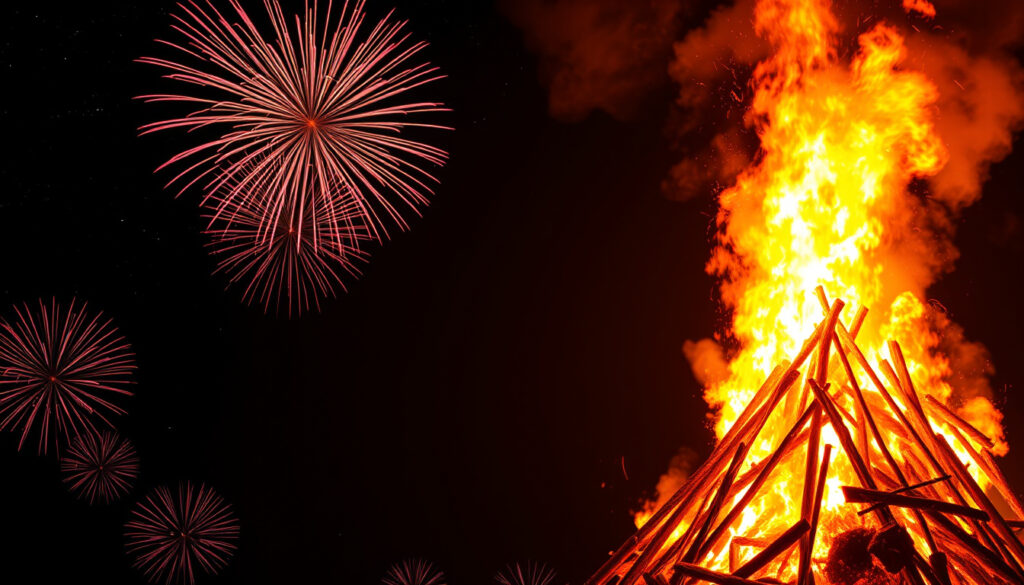
Bonfire Night, also known as Guy Fawkes Night or Fireworks Night, is one of the most anticipated annual events in the British calendar. Every year on November 5, communities across the United Kingdom come together to watch bonfires roar and fireworks light up the night sky. The occasion commemorates a dramatic moment in British history that nearly changed the course of the nation.
For those wondering when is bonfire night, the answer is straightforward: it falls on November 5 every single year, regardless of what day of the week it lands on. Whether the date falls on a weekday or weekend, the celebrations adapt accordingly, with many large-scale events shifting to the nearest Friday or Saturday for public convenience. Understanding the history, traditions, and timing of Bonfire Night enriches the experience for both newcomers and those marking the occasion year after year.
When is Bonfire Night in the UK?
Bonfire Night in the United Kingdom takes place on November 5 annually. This fixed date has been observed since 1606, when King James I first declared it a day of public thanksgiving. The event has since evolved into a broader celebration of community, fireworks, and seasonal togetherness, while retaining its historical roots.
The UK celebrates Bonfire Night consistently across England, Scotland, and Wales, with particularly large gatherings in urban centres. The date never changes, though the surrounding festivities often extend over a weekend to maximise public participation.
November 5, every year
Failed Gunpowder Plot of 1605
Bonfires, fireworks, burning effigies
Primarily England; events across UK
Key Takeaways
- Bonfire Night always falls on November 5, whatever the day of the week
- The event commemorates the failed Gunpowder Plot against Parliament in 1605
- Guy Fawkes himself was guarding 36 barrels of gunpowder beneath the House of Lords
- November 5 was declared a national day of thanksgiving by King James I
- Large public displays typically shift to the nearest weekend for accessibility
- Alexandra Palace in London is among the most popular venues for Bonfire Night fireworks
- The tradition continues with Yeomen of the Guard still searching Parliament cellars before State Openings
| Fact | Details |
|---|---|
| Official Name | Guy Fawkes Night |
| Date | 5 November |
| First Celebrated | 1606 |
| Key Figure | Guy Fawkes |
| Associated Poem | “Remember, remember the fifth of November” |
| Location of Plot | Beneath the House of Lords |
What is Bonfire Night and What Does it Celebrate?
Bonfire Night marks the anniversary of the Gunpowder Plot, a Catholic conspiracy uncovered in 1605 that aimed to assassinate King James I by blowing up the Houses of Parliament during its state opening. The plot was orchestrated by Robert Catesby and his associates, with Guy Fawkes placed in charge of guarding 36 barrels of gunpowder stored in the cellars beneath the House of Lords.
Fawkes was arrested in the early hours of November 5, 1605, after a tip-off led guards to search the cellars. The plot was foiled, and in response, King James I decreed that November 5 should be observed as a day of thanksgiving, marked by bonfires and the burning of effigies. Over time, these effigies shifted from images of the Pope to predominantly Guy Fawkes himself.
Traditions and Observances
The core traditions of Bonfire Night centre on fire in its many forms. Large communal bonfires burn effigies known as “guys,” stuffed figures representing Guy Fawkes. These figures are often built by community groups and placed atop bonfires as crowds gather to watch. Fireworks displays accompany almost every event, from small family gatherings in back gardens to large professional shows in city parks.
Sparklers are a staple for children and families, while food vendors and stalls at community events offer seasonal treats. Toffee apples, jacket potatoes, warm soups, and mulled wine are commonly associated with Bonfire Night, adding to the sense of autumnal celebration.
While Bonfire Night originally carried strong anti-Catholic sentiment, with Pope effigies burned alongside those of Fawkes, the event has evolved into a secular community celebration focused on fireworks and seasonal gatherings. The traditions persist, but their meaning has broadened considerably over four centuries.
Bonfire Night Dates for 2025 and 2026
Bonfire Night falls on November 5 every year, and this consistency holds for both 2025 and 2026. In 2025, the date falls on a Thursday, meaning many large public events are likely to shift to the preceding or following weekend to maximise attendance.
In 2026, November 5 lands on a Friday, which naturally lends itself to events throughout that long weekend. While some sources have listed November 3 in error for 2026, the confirmed date remains November 5 across authoritative sources.
Event schedules for 2025 and 2026 remain preliminary in many listings. Those wishing to attend specific large-scale displays should check local council announcements and venue websites closer to the date, particularly for popular locations such as Alexandra Palace or Battersea Park.
Large displays commonly occur on the closest weekend to November 5, so those searching for “bonfire night near me” will typically find the most options on the Saturday and Sunday surrounding the date.
Countdown Context
For those calculating how long until Bonfire Night, the event arrives annually in early November. The autumn timing means shorter days and longer nights, providing optimal conditions for fireworks displays after dark. Weather conditions can significantly affect the experience, making it worthwhile to monitor forecasts in the days leading up to any outdoor event.
Where and When is Bonfire Night Celebrated in London and Glasgow?
London hosts some of the most spectacular Bonfire Night events in the country. The capital’s major parks and venues draw thousands of spectators each year, with fireworks launched over iconic cityscapes. Alexandra Palace, colloquially known as Ally Pally, is among the most popular destinations, offering panoramic views of London alongside live entertainment and a traditional bonfire.
Battersea Park has historically held large displays, sometimes beginning as early as November 1 or 2 in previous years. Other established venues in and around London include the Dulwich Sports Club and Beckenham South Scout Group, the latter offering family-friendly early evening displays that cater specifically to children and younger families.
Bonfire Night in Glasgow
Glasgow follows the national tradition with its own Bonfire Night celebrations. The city typically hosts council-run displays alongside community events organised by local clubs, churches, and community groups. While specific details for 2025 and 2026 are limited in available sources, Glasgow’s approach mirrors that of other major UK cities, with bonfires and fireworks centred around accessible community spaces.
Those in Scotland looking for local events should monitor Glasgow City Council announcements and community noticeboards as November approaches. Like London, the timing of formal displays may shift slightly to accommodate weekend schedules.
Both London and Glasgow event details for 2025 and 2026 remain subject to confirmation. Official local authority websites and venue social media channels represent the most reliable sources for confirmed dates, ticketing information, and safety announcements ahead of any attendance.
For visitors to the UK who happen to be in Weston Super Mare Beach or surrounding areas during Bonfire Night, coastal towns often host their own community displays, offering a different atmosphere from city-centre events.
When Did Bonfire Night Start?
Bonfire Night began shortly after the Gunpowder Plot was uncovered. King James I issued a proclamation in January 1606 establishing November 5 as a day of public thanksgiving, marking the first official observance of what would become an enduring national tradition. The inaugural celebrations were relatively austere, focused primarily on church services and gratitude for the King’s survival.
Over the following decades, the event accumulated additional traditions. By the late 18th century, children were begging door to door with effigies of Guy Fawkes, a practice that helped cement the event’s popular character and gave rise to the term “Guy Fawkes Day.” The 19th century saw the tradition become more boisterous in places such as Lewes and Guildford, where class tensions occasionally flared into confrontation during Bonfire Night festivities.
Historical Evolution
The transition from religious and political thanksgiving to a broader popular celebration occurred gradually. The burning of effigies became more common, and fireworks were introduced as they became more widely available. By the 20th century, Bonfire Night had firmly established itself as one of the most widely observed annual events in the British calendar.
The rhyme “Remember, remember the fifth of November, gunpowder, treason and plot” became embedded in popular culture, serving as a mnemonic for generations of Britons. A 2002 public poll ranking the greatest Britons placed Guy Fawkes at number 30, illustrating the ambivalent but enduring fascination the figure continues to hold in the national consciousness.
Scotland offers its own rich tapestry of autumn and winter traditions for those exploring the country during this season. Best Places to Visit in Scotland provides guidance on destinations that showcase Scottish culture beyond Bonfire Night itself.
Bonfire Night Timeline
Understanding the sequence of events that led to Bonfire Night’s establishment helps contextualise why the date holds significance. The following timeline outlines the most important moments from the plot’s discovery to the modern celebration.
- November 4–5, 1605: Guy Fawkes is discovered in the Parliament cellars guarding 36 barrels of gunpowder and arrested
- January 1606: King James I declares November 5 a national day of thanksgiving
- November 5, 1606: The first official Bonfire Night is celebrated across England
- Late 18th century: Children begin begging with Fawkes effigies, popularising the tradition
- 19th century: Towns such as Lewes develop their own distinct Bonfire Night traditions, sometimes involving class-based confrontations
- 2002: Guy Fawkes is ranked 30th in a BBC poll of the greatest Britons
- Today: Bonfire Night remains an annual fixture, observed with bonfires, fireworks, and community events across the UK
What We Know and What Remains Unclear
The core facts of Bonfire Night are well documented and consistent across sources. The date, the historical event it commemorates, and the main traditions are firmly established and unlikely to change.
| Established Information | Uncertain or Evolving Details |
|---|---|
| Date: November 5 every year | Specific venue details for 2025 and 2026 remain subject to confirmation |
| Origins in the Gunpowder Plot of 1605 | Glasgow-specific event schedules have limited publicly available detail |
| Guy Fawkes arrested in Parliament cellars | Weather conditions will naturally affect individual display experiences |
| Bonfires and fireworks as primary traditions | Any policy changes regarding fireworks regulations would require official confirmation |
| First observed as a national holiday in 1606 | Some minor historical details, such as exact timing of arrest, vary by calendar system (Old Style vs. New Style) |
| Events shift to nearest weekend for public convenience | Ticketing requirements for major venues may change year to year |
The Broader Significance of Bonfire Night
Bonfire Night occupies a distinctive place in British cultural life. Unlike many observances that have faded or shifted in meaning, it has remained continuously relevant for more than four centuries. Its endurance reflects a combination of factors: the drama of the original event, the appeal of fireworks and communal celebration, and the flexibility to adapt traditions to contemporary tastes.
Regional variations have emerged over time, with towns developing their own distinct customs. Some communities maintain elaborate ceremonies and torchlit processions, while others keep things simpler with a bonfire and a local fireworks display. The common thread is the gathering of communities around fire and light as autumn transitions to winter.
The event also serves as a reminder of the resilience of parliamentary democracy. The tradition of the Yeomen of the Guard searching the cellars of Parliament before each State Opening endures to this day, a direct continuation of the precautions first implemented after the Gunpowder Plot was uncovered.
Sources and Perspectives
Several authoritative sources provide the factual foundation for Bonfire Night’s history and traditions. Wikipedia’s entry on Guy Fawkes Night offers a comprehensive overview of the event’s historical development, while English Heritage provides educational context from an official heritage organisation. The BBC’s Newsround service offers accessible coverage suitable for younger audiences.
“36 barrels of gunpowder lay hidden beneath the House of Lords, ready to explode during the state opening of Parliament.” — English Heritage
“Remember, remember the fifth of November, gunpowder, treason and plot.” — Traditional rhyme
Summary
Bonfire Night falls on November 5 every year, commemorating the failed Gunpowder Plot of 1605 when Guy Fawkes was arrested while guarding explosives beneath the Houses of Parliament. Celebrations centre on bonfires, fireworks, and the burning of effigies, with major events held in cities across the UK including London and Glasgow. In 2025, the date falls on Thursday November 5, with festivities likely extending to the surrounding weekend. In 2026, November 5 falls on a Friday, allowing for natural weekend celebrations. The tradition dates to 1606 and remains one of the most widely observed events in the British calendar. Those planning to attend organised displays should consult local listings closer to the date for confirmed schedules and any safety guidelines.
Frequently Asked Questions
What day is Bonfire Night 2025?
Bonfire Night 2025 falls on Thursday, November 5. Many events shift to the nearest weekend for accessibility.
What date is Bonfire Night?
Bonfire Night is always on November 5, regardless of what day of the week it falls on.
When is Bonfire Night 2026?
Bonfire Night 2026 falls on Friday, November 5, making it convenient for weekend celebrations.
What does Bonfire Night celebrate?
Bonfire Night commemorates the failure of the Gunpowder Plot in 1605, when Catholic conspirators attempted to blow up the Houses of Parliament.
When did Bonfire Night first start?
Bonfire Night was first observed in 1606, the year after King James I declared November 5 a national day of thanksgiving.
Is Bonfire Night only celebrated in England?
Bonfire Night is observed most widely in England, but celebrations also take place across Scotland, Wales, and Northern Ireland, particularly in larger towns and cities.
What is the rhyme associated with Bonfire Night?
“Remember, remember the fifth of November, gunpowder, treason and plot” is the traditional rhyme passed down through generations in Britain.
How long till Bonfire Night?
Bonfire Night arrives every November 5. Countdown tools are available online for those tracking the days until the next celebration.