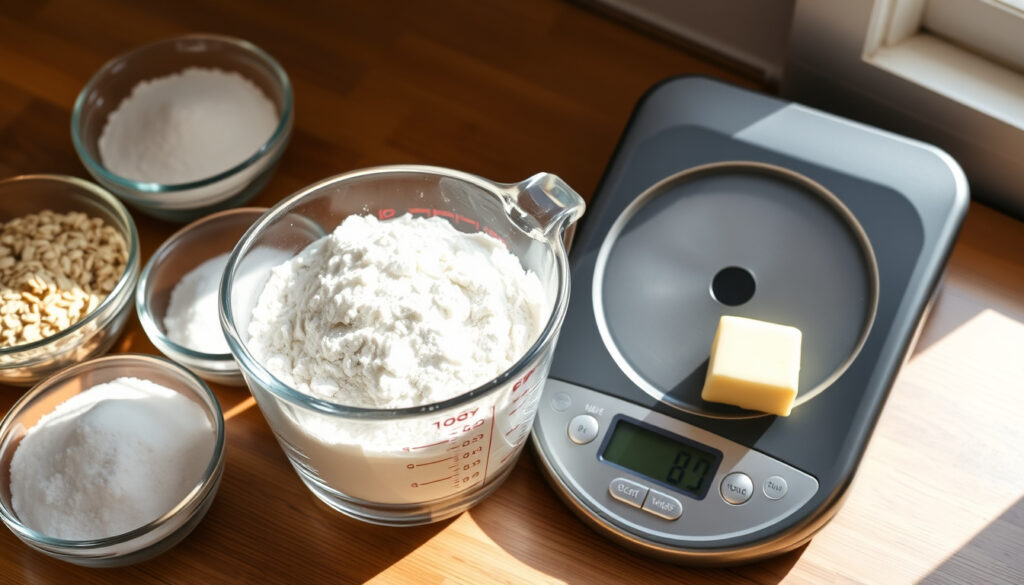
How Much is a Cup in Grams – Baking Ingredient Weights
Converting cups to grams is one of the most common challenges home bakers face. Unlike liquids, where 1 cup consistently equals around 240 grams, dry ingredients vary dramatically based on their density, how they are packed, and even the brand of the product. A cup of flour does not weigh the same as a cup of sugar, and neither resembles the weight of butter or rice.
This discrepancy explains why following a recipe precisely can yield different results depending on how ingredients were measured. Professional bakers consistently emphasize that weighing ingredients produces far more reliable outcomes than relying on volume measurements alone.
How Many Grams Are in 1 Cup?
The answer depends entirely on what you are measuring. While water and similar liquids maintain a predictable relationship between volume and weight, most baking ingredients do not follow this pattern. Understanding the distinction between volume-based and weight-based measurement systems helps explain why the same cup can represent 120 grams of flour or 200 grams of sugar.
236.6 ml / ~240g water
250 ml / 250g water
Grams per cup differ by ingredient
Scales eliminate measurement guesswork
Key Facts About Cup-to-Gram Conversions
- Flour ranges from 110g to 155g per cup depending on how it is sifted and packed
- Granulated sugar consistently measures around 200g per cup when packed
- Butter varies between 225g and 240g per cup depending on how firmly it is packed
- The US cup measures 236.6ml while the metric cup holds 250ml
- Packing brown sugar tightly can add over 30g compared to loosely measured sugar
- Different countries use different cup standards, affecting final weights by approximately 4%
- Humidity and brand variations can shift gram measurements by several percentage points
Quick Reference: Common Ingredients in Grams
| Ingredient | 1 Cup (grams) | ½ Cup (grams) | Notes |
|---|---|---|---|
| Water | 236-240 | 118-120 | Standard reference; 1g/ml density |
| All-Purpose Flour | 120-125 | 60-62.5 | Unsifted; spooned into cup |
| Granulated Sugar | 200 | 100 | Packed lightly |
| Brown Sugar (packed) | 180-213 | 90-106 | Varies with packing method |
| Butter | 225-240 | 112.5-120 | Packed; 2 sticks per cup |
| Milk (whole) | 245 | 122.5 | Slightly denser than water |
| Rice (uncooked) | 190 | 95 | White rice; varies by type |
| Oats (rolled) | 90 | 45 | Uncooked |
| Cocoa Powder | 100 | 50 | Unsifted |
| Bread Flour | 130 | 65 | Denser than all-purpose |
Grams in a Cup by Common Ingredients
Baking requires precision that volume measurements often cannot provide. Different ingredients have fundamentally different densities, which means identical volumes produce vastly different weights. Recognizing which ingredients fall into similar categories helps home bakers develop intuition for these conversions.
Flour and Grain-Based Ingredients
Flour presents the most significant variability among dry ingredients. According to King Arthur Baking’s ingredient weight chart, all-purpose flour typically converts to approximately 120 grams per cup when properly spooned and leveled. However, factors such as humidity, brand, and measuring technique can shift this value between 110 and 155 grams.
Whole wheat flour weighs slightly less at around 113 grams per cup, while bread flour runs denser at approximately 130 grams. Specialty flours like brown rice flour and buckwheat flour measure at 128 and 120 grams respectively. The method of incorporation—whether flour is sifted before measuring or scooped directly from the bag—accounts for much of this variation.
Sugar Variations
Sugar conversions demonstrate how crystal structure affects weight. Granulated white sugar measures consistently at about 200 grams per cup, though some sources cite 220 grams for caster sugar. Brown sugar presents greater complexity because its moisture content and packing method significantly influence the final weight.
According to Doves Farm’s conversion table, loosely measured brown sugar may weigh as little as 180 grams per cup, while firmly packed brown sugar can reach 213 grams. This 33-gram difference represents a potential 18% error that could disrupt baking chemistry.
Liquids and Dairy
Liquids provide the most straightforward conversion because water and water-based liquids have a density very close to 1 gram per milliliter. A standard US cup of water weighs approximately 236.6 grams, while a metric cup holds 250 grams. Commercial Kitchen Store’s conversion guide notes that whole milk measures slightly heavier at 245 grams per cup due to its fat and protein content.
When measuring liquids, always place the cup on a flat surface and check the measurement at eye level. Tilted cups consistently produce inaccurate readings.
Fats and Oils
Butter conversions depend heavily on how the butter is packed into the measuring cup. Most references cite a range between 225 and 240 grams per cup, with the variance stemming from air pockets and how firmly the butter is pressed. Most commercial butter sticks in the United States are sold in ½-cup (113 gram) portions, making this a convenient reference point.
Cooking oil measures lighter than butter at approximately 220 grams per cup, while vegetable shortening falls around 190 grams. Coconut oil presents a special case: when solid, it measures similarly to butter, but its density changes with temperature, potentially affecting measurements in recipes requiring precision.
Grains and Starches
Uncooked grains present their own conversion challenges. White rice averages 190 grams per cup uncooked, though this weight changes dramatically once cooked—a distinction that matters significantly when following recipes. Eat Little Bird’s conversion guide notes that rolled oats convert to approximately 90 grams per cup, while couscous measures heavier at 180 grams.
Starches like cornflour and cornstarch range from 120 to 125 grams per cup. Sifting before measuring reduces the weight, while compacting increases it substantially.
How to Convert Cups to Grams for Baking
Successful baking conversion requires understanding the relationship between volume, mass, and density. The fundamental formula is straightforward: grams equal cup volume multiplied by ingredient density. However, density varies not just between ingredients but also within the same ingredient depending on preparation method.
Understanding Density
Density represents mass per unit volume, typically expressed as grams per milliliter. Water serves as the baseline reference with a density of 1g/ml, meaning 1 milliliter of water weighs exactly 1 gram. Most baking ingredients have densities either greater than or less than this baseline, which explains why a cup of flour weighs less than a cup of sugar despite appearing similar in size.
Professional bakers at The Bakeologie emphasize that measuring flour by weight rather than volume eliminates the primary source of recipe failure. Scooping flour directly from a bag compacts it, potentially adding 30% more flour than the recipe intended.
Step-by-Step Conversion Process
Converting cups to grams requires three steps. First, identify the volume of your cup—standard US cups hold 236.6ml while metric cups contain 250ml. Second, determine the density of your ingredient using reliable references like those compiled in this article. Third, multiply the cup volume by the density to obtain the gram weight.
For reverse conversions (grams to cups), divide the gram amount by the ingredient density. For example, 250 grams of all-purpose flour divided by 120g per cup yields approximately 2.08 cups. This calculation works reliably for most ingredients, though minor variations may occur due to packing differences.
Regional cup sizes differ: the Australian cup holds 250ml compared to the US 236.6ml standard. This 4% difference compounds across multiple measurements, potentially affecting recipe outcomes significantly.
When to Weigh Instead
For recipes where chemical reactions matter—most baking falls into this category—weighing ingredients produces superior results. Bread dough, cake batters, and pastry rely on precise flour-to-liquid ratios that volume measurements cannot guarantee. Even a difference of 10 or 15 grams of flour can transform the texture of the final product. For more information on converting units, check out this helpful guide: square feet in an acre
Investing in a reliable digital kitchen scale eliminates guesswork entirely. Place your mixing bowl on the scale, zero it, then add each ingredient directly. This technique, called weighing by difference, produces consistent results that volume measurements simply cannot match.
Regional Cup Standards and Why They Matter
The absence of a universal cup measurement creates persistent confusion in international recipe adaptation. Three primary standards exist: the US customary cup (236.6ml), the Australian metric cup (250ml), and the UK cup (250ml). This variation means that a recipe calling for 1 cup of flour could specify anywhere from 236.6ml to 250ml of volume.
When following recipes from different countries, understanding these differences prevents miscalculation. A US recipe converted to Australian measurements by simply using the local cup would introduce approximately 4% more of each ingredient. For delicate recipes, this discrepancy can mean the difference between success and failure.
What We Know and What Remains Uncertain
| Established Information | Areas of Variation |
|---|---|
| 1 US cup water = 236.6g | Flour weight by brand |
| 1 metric cup water = 250g | Brown sugar packing density |
| Butter ranges 225-240g per cup | Humidity effects on dry ingredients |
| Granulated sugar ~200g per cup | Specialty flour weights |
| US cup is 236.6ml standard | Yogurt thickness variations |
The Science Behind Volume and Weight
The reason volume and weight diverge for most ingredients lies in particle size and packing efficiency. Fine powders like flour contain air between particles, and the amount of trapped air changes based on how the ingredient is handled. Dipping a measuring cup directly into flour compresses it, while spooning and leveling introduces more air, reducing the weight per cup.
Sugar crystals pack more uniformly than flour particles, which is why sugar measurements tend to be more consistent across sources. Liquids present the simplest case because their molecules fill available space completely without air gaps, making density predictable and stable across measurement techniques.
Authoritative Sources for Kitchen Conversions
The difference between scooping flour from a bag versus spooning it into a measuring cup can be as much as 30 grams per cup. For a recipe calling 4 cups of flour, this translates to an entire extra cup of flour by weight.
— King Arthur Baking, Ingredient Weight Guide
The conversion data presented in this article draws from multiple authoritative baking resources including King Arthur Baking’s comprehensive ingredient database, Doves Farm’s UK-based conversion tables, and Commercial Kitchen Store’s international comparison data. These sources generally align on standard measurements while noting variations caused by regional standards, packing methods, and ingredient brands.
Summary
Converting cups to grams requires understanding that volume does not equal weight for most baking ingredients. While water maintains a predictable 1:1 relationship between milliliters and grams, dry ingredients vary based on density, packing method, and brand. A standard US cup contains 236.6ml, but this volume can hold anywhere from 90 grams of rolled oats to 240 grams of packed butter.
Professional bakers consistently recommend weighing ingredients for recipes where precision matters. Protein in an Egg – Grams by Size, White vs Yolk provides additional context for precise baking measurements. For those without scales, using the most commonly cited values—120g for flour, 200g for sugar, and 240g for water—produces acceptable results in most recipes, though slight variations remain inevitable.
Frequently Asked Questions
How many grams are in a cup of water?
A standard US cup of water contains approximately 236.6 grams, while a metric cup holds 250 grams. Water’s density of 1g/ml makes this the most straightforward conversion in baking.
What is the difference between a US cup and a metric cup in grams?
The US cup measures 236.6ml while the metric cup holds 250ml. For water and water-based liquids, this translates to a 13.4-gram difference, roughly 4% larger for the metric cup.
How do I convert cups to grams for baking?
Multiply the number of cups by the specific ingredient’s gram-per-cup value. Alternatively, divide the desired grams by the ingredient’s density to obtain cup measurements. Using a kitchen scale provides the most accurate results.
Why does flour weight vary so much between sources?
Flour density changes dramatically based on sifting, scooping versus spooning, humidity, and brand. Unsifted flour can range from 110 to 155 grams per cup depending on how it is measured.
Is 1 cup always 250 grams?
Only for water and liquids with similar density. For most dry ingredients, 1 cup equals between 90 and 240 grams depending on the ingredient. Only water and milk-based liquids approximate 250g per metric cup.
How much does a cup of butter weigh in grams?
Butter ranges from 225 to 240 grams per cup depending on packing. Most commercial references cite 227g as standard, which equals exactly 2 sticks of US butter.
What is the most accurate way to measure dry ingredients?
Weighing ingredients on a digital kitchen scale provides the most accurate measurements. If using volume measurements, spoon dry ingredients into the measuring cup and level with a straight edge, avoiding compacting.
More related posts
 Hazel Irvine – Career, Family, and Snooker Absence
 Tony Leung Chiu-wai – Biography, Movies and Personal Life
 Cirque du Soleil London – Last Run Dates and Details
 Compound Interest Calculator UK – Savings and Pension Growth Tools
 EU 36 to UK – Complete Guide to Shoe and Clothing Sizes
 Is Liverpool Playing Today – Next FA Cup Match Details
 Gamma Telecom Holdings Ltd – Company Profile and Services
 How to Schedule an Email in Outlook – Complete Platform Guide
