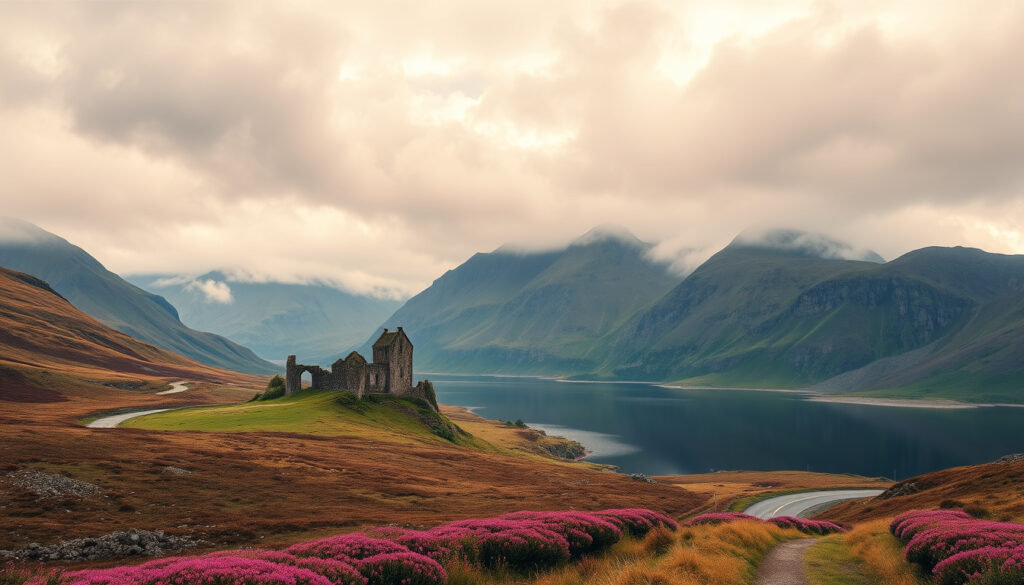
Best Places to Visit in Scotland – Top Destinations and 7-Day Itinerary
Scotland draws millions of visitors each year with its dramatic highlands, ancient castles, and windswept islands. From the medieval ramparts of Edinburgh Castle to the mystical landscapes of the Isle of Skye, the country offers experiences that cater to history buffs, outdoor enthusiasts, and families alike. This guide maps out the essential destinations, practical timing considerations, and a week-long itinerary to help travelers make the most of a Scottish adventure.
Planning a trip to Scotland means balancing iconic landmarks with hidden gems scattered across mainland and islands. The North Coast 500 route has transformed highland tourism, while destinations like Loch Lomond and Stirling Castle continue to anchor any first-time visit. Whether arriving in Edinburgh for its festivals or driving the NC500 loop from Inverness, the country’s compact geography rewards those who venture beyond the obvious hotspots.
What Are the Best Places to Visit in Scotland?
Scotland’s tourism landscape centres on a handful of must-see destinations that consistently rank among the most visited attractions. These locations represent the full spectrum of Scottish experiences, from urban cultural hubs to remote highland wilderness.
Booking tickets for major attractions like Edinburgh Castle and Urquhart Castle in advance helps avoid queues during peak summer months. Many historic sites also offer discounted combined passes through VisitScotland.
Castles, festivals, history
Culture, food, architecture
Lochs, hikes, scenery
Wildlife, beaches, isolation
Key insights shaping Scottish tourism
- Edinburgh Castle consistently ranks as Scotland’s most-visited paid attraction, drawing visitors who explore its crown jewels and military museums.
- The North Coast 500 route has become one of Britain’s most celebrated road trips, with visitor numbers climbing steadily since its official designation.
- Island destinations like Skye and Mull have seen tourism growth outpacing mainland attractions, driven by social media exposure.
- Sustainability-focused travel has gained momentum, with national parks promoting low-impact hiking and electric vehicle hire options.
- Family-friendly attractions have expanded significantly, particularly around Loch Lomond where aquariums and adventure parks cater to younger visitors.
- Whisky tourism continues to thrive along Speyside trails, with several distilleries reporting record visitor numbers in recent seasons.
| Place | Highlight | Best For | Distance from Edinburgh |
|---|---|---|---|
| Edinburgh Castle | Volcano-top fortress, crown jewels | History, views, museums | City centre |
| Stirling Castle | Great Hall, Renaissance palace | Architecture, Mary Queen of Scots | 35 miles |
| Loch Lomond | Serene loch, Trossachs parkland | Families, water sports | 25 miles from Glasgow |
| Isle of Skye | Quiraing, Cuillins, fairy pools | Hiking, photography | 170 miles + ferry |
| Loch Ness | Deep waters, Urquhart ruins | Boat cruises, folklore | 115 miles from Edinburgh |
| Glencoe | Dramatic valley, Three Sisters | Scenery, walking | 95 miles |
| Eilean Donan | Iconic castle at three lochs | Photography, heritage | 125 miles from Edinburgh |
| Culloden Battlefield | 1746 Jacobite defeat site | History, sombre reflection | 105 miles from Edinburgh |
| Arisaig Coast | White sand beaches, Small Isles | Beach lovers, train views | 135 miles |
| Orkney Mainland | Skara Brae, ring of Brodgar | Ancient history, archaeology | Ferry from Thurso |
What Is the Most Beautiful Place in Scotland?
Beauty in Scotland proves difficult to pin down, as landscapes shift dramatically between regions. The highlands deliver dramatic mountain vistas, while coastal areas offer different kinds of splendor with white sand beaches and turquoise waters that belie the northern latitude.
Highland landscapes and natural wonders
Glencoe remains one of Scotland’s most photographed landscapes, its u-shaped valley carved by ancient glaciers. The Three Sisters mountains dominate the skyline, while walking trails cater to abilities ranging from casual strolls to demanding ascents. Travel guides consistently highlight Glencoe as possessing some of Britain’s finest panoramas.
The Isle of Skye draws visitors with its unique geological formations. The Quiraing provides ever-shifting views as mist rolls across the plateau, while the Old Man of Storr stands as a recognizable landmark visible from the island’s eastern coast. Sunrise hikes at Quiraing have become particularly popular among photographers seeking dramatic lighting conditions.
Coastal and island beauty
Scotland’s coastline extends for thousands of miles, encompassing some of Europe’s most secluded beaches. The small isles of Rum, Eigg, and Muck remain largely unspoiled, accessible by ferry from Mallaig on the mainland. The western seaboard, particularly around Ardnamurchan, offers views across to the islands of Muck, Eigg, and Rum, with the mainland point representing the westernmost point of Britain’s mainland.
Hidden gems emerge throughout the country for those willing to explore beyond popular circuits. Travel blogs documenting Scotland’s lesser-known sites point to locations like Pennan, where the red phone box featured in the film Local Hero draws curious visitors, and Culross, whose preserved streetscape served as a filming location for the television series Outlander.
Prettiest villages and cultural landscapes
Scottish villages possess a distinct character shaped by local materials and centuries of tradition. Pittenweem along the East Neuk of Fife retains its fishing heritage alongside artisan studios and galleries. The village of Falkland provides a contrasting experience, its royal palace and crescent lending historical gravitas.
For travelers seeking to combine scenic beauty with cultural depth, rural accommodations throughout Scotland offer convenient bases for exploring nearby attractions. Many villages host weekly markets showcasing local produce, providing opportunities to sample regional flavors alongside sightseeing.
Scotland’s definition of beauty often includes weather-driven drama. Visitors frequently report that misty conditions on the highlands produce the atmospheric landscapes that define the Scottish experience for many travelers.
Where Should I Go in Scotland for a Week?
A week allows travelers to explore Scotland’s highlights without excessive rushing, particularly when using the North Coast 500 route as a framework. Most itineraries begin in either Edinburgh or Glasgow, with the latter offering easier access to the western highlands and islands.
Seven-day road trip itinerary
- Days 1-2: Edinburgh and Stirling — Edinburgh Castle occupies a volcanic plug dominating the city skyline, while the nearby Wallace Monument commemorates Scottish resistance to English invasion. A day trip to Stirling Castle provides Renaissance architecture and strategic views across central Scotland. Accommodation in Edinburgh’s Old Town places visitors near major attractions and transport links.
- Day 3: Glencoe to Fort William — The drive from Edinburgh reaches Glencoe within approximately two hours, with hiking trails suitable for varying fitness levels. The area provides access to the Jacobite Steam Train, the Harry Potter-inspired railway journey departing from Mallaig. Castle Stalker occupies a tidal location near the road, its position making for striking photographs.
- Day 4: Isle of Skye — The crossing from Mallaig to Armadale takes approximately 30 minutes, with the Glenelg ferry offering an alternative scenic route for those with more time. Skye rewards visitors with dramatic topography including the Cuillin mountains, Quiraing, and fairy pools. Portree serves as the island’s main service centre, offering accommodation and dining options.
- Days 5-6: NC500 Northern Loop — The route from Skye returns to the mainland via the bridge at Kyle of Lochalsh, then continues north toward Inverness. Stopping points include Loch Ness with its deep waters and legendary monster folklore, Culloden Battlefield marking the final Jacobite uprising, and the Cairngorms reindeer herd among distinctive highland experiences. Moray Firth offers opportunities to observe dolphins from shore-based viewing points.
- Day 7: East Coast Return — The return leg via Aberdeen and coastal roads passes Dunnottar Castle, its dramatic cliff setting ranking among Scotland’s most photographed castles. Alternative routes through Perth and Dundee provide varied scenery and additional castle visits.
Tailoring the route for different travelers
Families with children may extend time at Loch Lomond, where the SEA LIFE Aquarium and Treezone adventure course provide entertainment for younger visitors. The Cairngorms reindeer herd offers memorable wildlife encounters, with guided walks suitable for families with children old enough to manage moderate hiking distances.
Solo travelers and those operating on tighter budgets can access many highlights without vehicle transport. ScotRail services connect major cities and towns, while backpacker hostels in Edinburgh and Inverness offer accommodation starting around £50 per night. Camping along the NC500 provides further budget flexibility, though facilities in more remote areas require self-sufficiency.
Summer driving along the NC500 demands patience, as single-track roads with passing places create congestion during peak July and August weekends. Those seeking quieter conditions might consider shoulder-season visits in May or September, when weather remains mild and tourist numbers decrease.
What Is the Best Time to Visit Scotland?
Summer months between June and August offer the warmest conditions and longest daylight hours, making them the most popular visiting period. Average temperatures range from 15 to 20 degrees Celsius, with late June offering nearly 18 hours of daylight in the far north. This extended daylight proves particularly valuable for road trips and hiking expeditions.
Weather patterns and practical preparation
Rainfall occurs throughout the year in Scotland, with western coasts and highland areas receiving substantially more precipitation than eastern lowlands. The phrase “four seasons in one day” reflects actual conditions, where sunshine, rain, wind, and mist can all occur within hours. Travel resources advise packing layers regardless of season, with waterproof outer layers proving essential.
Midges present a summer nuisance, particularly in the highlands and islands during calm, damp conditions. These small insects thrive in still, humid environments and can make evenings uncomfortable for those without protection. Midge repellent sprays and head nets are widely available throughout tourist areas, while breeze-swept coastal locations generally provide relief.
Evaluating Scotland’s year-round appeal
Scotland rewards visits across all seasons, though each offers distinct advantages. Spring brings lambing season and blooming heather, while autumn delivers color changes in birch and rowan trees. Winter daylight hours shrink dramatically, with Edinburgh experiencing only around seven hours of daylight in December, but this season brings fewer crowds and lower accommodation prices.
The question of whether Scotland is worth visiting admits no simple answer. Tourism authorities maintain that Scotland’s appeal extends beyond weather, with dramatic highland scenery often enhanced by overcast conditions and misty atmospheres. Many photographers actively seek the moody conditions that winter and shoulder seasons provide.
Planning Your Scottish Journey
Scotland presents a destination that rewards careful planning while remaining accessible to spontaneous travelers. The country’s compact geography means that mountain landscapes, coastal shores, and cultural centers lie within manageable driving distances when routes are thoughtfully organized.
Budget considerations vary significantly based on travel style and season. A weekly trip covering the highlights presented here typically requires £500-800 per person when accounting for fuel, accommodation, and attraction entry fees. Those camping or staying in hostels can reduce costs substantially, while luxury travelers will find accommodation options ranging from historic castle hotels to exclusive island retreats.
For travelers seeking to combine Scottish football culture with sightseeing, national team match schedules may influence travel timing, with matches at Hampden Park in Glasgow providing cultural experiences alongside tourist attractions.
Understanding What Remains Uncertain
Several factors affecting Scottish travel remain difficult to predict with certainty. Seasonal visitor numbers fluctuate based on weather conditions that cannot be forecast more than a few days in advance, meaning that even summer trips may encounter crowded attractions or quiet roads depending on conditions in preceding weeks.
The designation of “best” places to visit inherently reflects subjective judgment. Visitor rankings from sources like TripAdvisor provide crowdsourced guidance, but individual preferences for history, scenery, or activities mean that different destinations will resonate differently with each traveler.
The Broader Scottish Context
Scotland’s tourism infrastructure has evolved considerably over the past decade, with improved transport connections and expanded visitor facilities making previously remote destinations more accessible. The North Coast 500 route exemplifies this development, transforming a collection of existing roads into a coherent tourism product that has generated significant economic activity in highland communities.
Environmental considerations increasingly shape tourism discussions, with national parks and conservation bodies promoting sustainable practices. The Cairngorms National Park and Loch Lomond and The Trossachs National Park both offer low-impact hiking opportunities, while initiatives like the Argyll Hope Spot encourage marine conservation awareness among visitors.
Historical sites across Scotland preserve narratives spanning thousands of years, from prehistoric settlements like Skara Brae on Orkney to Renaissance palaces such as Stirling Castle. This historical depth provides context for understanding contemporary Scotland, its relationship with England, and its distinct legal and educational traditions.
Sources and Perspectives
Information in this guide draws from official tourism bodies including VisitScotland, which provides visitor statistics and attraction information for destinations across the country. Historic Environment Scotland manages many of Scotland’s premier castles and ancient sites, while the National Trust for Scotland preserves additional heritage properties.
VisitScotland identifies Edinburgh Castle as Scotland’s most-visited paid attraction, with visitor numbers consistently exceeding those of other heritage sites across the country.
— VisitScotland attractions data
Independent travel resources including Watch Me See and Wayfaring Kiwi offer detailed accounts from travelers who have completed the routes described here, providing practical insights not always available through official sources.
Summary
Scotland’s appeal combines historical richness, natural drama, and cultural distinctiveness within a manageable geographic area. First-time visitors should prioritize Edinburgh and the highlands, while those returning can explore islands, coastal villages, and whisky trails. Summer offers the most reliable weather but also the largest crowds, making shoulder-season visits attractive for travelers seeking quieter conditions. Regardless of timing, packing appropriately for variable weather ensures that Scotland’s beauty remains accessible whatever conditions arise.
Frequently Asked Questions
Is Scotland worth visiting?
Scotland offers experiences difficult to replicate elsewhere in Europe, from dramatic highland scenery to well-preserved medieval castles. The country’s compact geography allows visitors to experience remarkable variety within a single trip, while its distinct culture and traditions provide meaningful encounters beyond surface-level tourism.
Best castles to visit in Scotland?
Edinburgh Castle, Stirling Castle, Eilean Donan, and Castle Stalker rank among the most photographed and historically significant. Each offers distinct experiences, from Edinburgh’s royal artifacts to Stirling’s Renaissance architecture and Eilean Donan’s romantic setting at a loch junction.
Prettiest villages in Scotland?
Culross preserves an Outlander filming location with remarkable authenticity, while Pennan draws visitors to its red phone box. Falkland offers royal palace heritage, and Pittenweem maintains fishing tradition alongside artistic community. Each village rewards exploration beyond the main viewpoints.
How many days do you need in Scotland?
Seven days allows reasonable exploration of Scotland’s major highlights, including Edinburgh, the highlands, and an island destination like Skye. Those with less time can focus on Edinburgh and either the highlands or a single island, while travelers with two weeks can incorporate Orkney, additional islands, and whisky regions.
Best places for families with children?
Loch Lomond offers aquariums and adventure parks near Glasgow, while the Cairngorms reindeer herd provides unique wildlife encounters. Riverside Museum in Glasgow presents transport exhibits suitable for children, and many beaches along the west coast provide safe paddling opportunities.
Hidden gems away from tourist crowds?
Unst in Shetland represents Britain’s northernmost inhabited isle, while Dunnet Head provides the northernmost mainland point. Ardnamurchan offers the westernmost mainland location, and the Small Isles of Rum, Eigg, and Muck remain largely undiscovered by mainstream tourism.
Is driving in Scotland difficult for visitors?
Mainland roads present no particular difficulties for those accustomed to driving on the left, with major routes well-signposted. Single-track roads common in the highlands require patience and adherence to passing place protocols. Those uncomfortable driving may rely on ScotRail services and organized tour operators.
What should I pack for a Scottish trip?
Layers form the foundation of any Scottish packing list, including base layers, mid-layer fleeces, and waterproof outer shells. Comfortable hiking boots serve both urban exploration and highland walks. Midge repellent proves essential in summer, while sunglasses and sunscreen protect against unexpected sunny conditions.
More related posts
 K-Pop Demon Hunters – Netflix Release, Cast and Records
 Sky Customer Service Opening Times – Phone, Chat and Best Contact Hours
 Protein in an Egg – Grams by Size, White vs Yolk
 Tesco M&S and Aldi Product Recalls – Full List and Refund Guide
 Compound Interest Calculator UK – Savings and Pension Growth Tools
 TV Shows with Keeley Hawes – Complete Guide to Her Career
 When Is Eid Ul Adha 2025 – Key Dates for Saudi Arabia and UK
 King Spain – Role, Family & History of the Modern Monarchy
