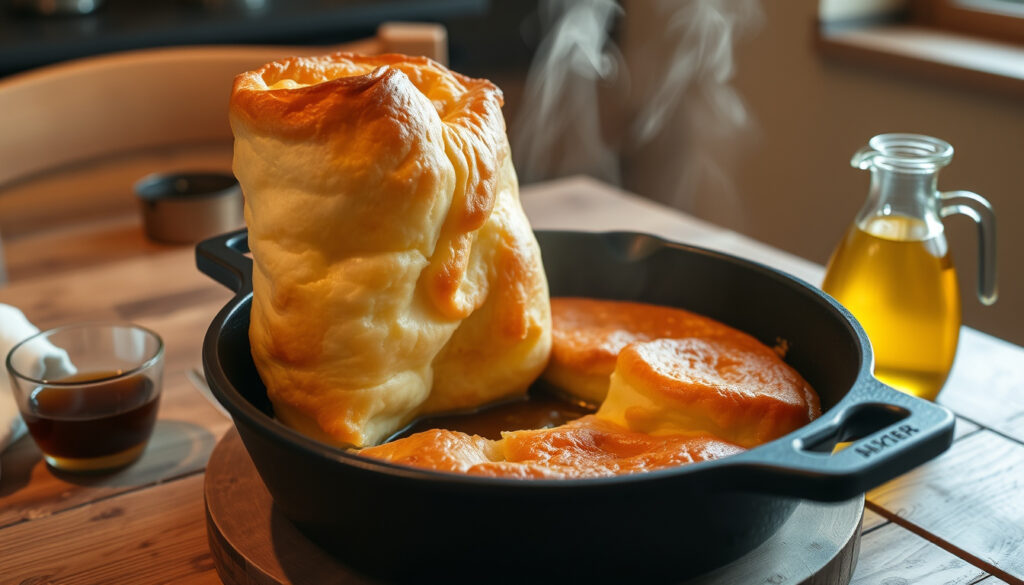
Yorkshire Pudding Recipe UK – Foolproof & Traditional Guide
Yorkshire pudding is a British batter-based side dish made from flour, eggs, and milk or water, traditionally baked in very hot fat so it puffs up and crisps at the edges. For decades it has been a fixture of the Sunday roast across the United Kingdom, valued as much for its dramatic rise as for its ability to soak up gravy.
Getting the perfect rise, a crisp exterior, and a soft, airy centre depends on a handful of details. The temperature of the fat, how long the batter rests, and whether the oven door stays shut all play a measurable role in the outcome. Small adjustments make a significant difference.
This guide covers the traditional method, recommended ingredient ratios, serving sizes for two, four, and six people, and approaches associated with well-known UK chefs. It also addresses common problems such as deflation, dense texture, and poor rise, drawing on established recipe sources and culinary references.
What Is the Best Traditional Yorkshire Pudding Recipe UK?
10–15 minutes
30 minutes to overnight
20–25 minutes at 220°C
Scales from 2 to 12+
A traditional batter is built from plain flour, eggs, milk, and salt, as confirmed by multiple recipe sources including Yorkshirepudd.co.uk, The Daring Gourmet, and Wikipedia. Several versions also specify beef dripping or vegetable oil for the tin, with the key requirement that the fat is extremely hot before the batter goes in.
- Resting the batter at least 30 minutes (or overnight) significantly improves rise and texture, according to multiple experts.
- Preheating the oil until smoking is essential for immediate steam and lift — a principle echoed by BBC Good Food, Jamie Oliver, and Serious Eats.
- Opening the oven door during baking causes deflation; use a window or oven light instead.
- Filling each hole only half to three-quarters full prevents heavy, doughy bottoms.
- Mary Berry’s recipe uses 3 eggs to 100g flour; Jamie Oliver’s uses 4 eggs to 140g flour — differences that affect the richness and structure of the finished pudding.
| Aspect | Detail |
|---|---|
| Key Ingredients | Plain flour, eggs, milk (semi-skimmed), salt, sunflower oil |
| Classic Ratio (per 2 puddings) | 50g flour, 2 eggs, 100ml milk (approx) |
| Oven Temperature | 220°C / 200°C fan / gas 7 |
| Pan Type | 12-hole muffin tin or deep Yorkshire pudding tin |
| Batter Resting | Minimum 30 minutes, up to 24 hours |
| Yield | 1 recipe from Mary Berry makes 12 puds; Jamie Oliver makes 12 |
Ingredients for a Classic Yorkshire Pudding
Typical ingredient ratios from the sources include 225g plain flour, 4 eggs, 300ml whole milk, and 1 tbsp beef dripping, as noted by Yorkshirepudd.co.uk. A Gordon Ramsay version uses 125g plain flour, 3 eggs, 150ml milk, salt, and vegetable oil for 8 large puddings. A more equal-volume style batter using flour, milk, and eggs in roughly similar measures is also noted in historical and reference material from British Food History.
For a classic UK taste, beef dripping is the strongest traditional choice. For a neutral or lighter flavour, vegetable oil works well and is used in the Gordon Ramsay version. Lard is mentioned elsewhere as an acceptable alternative.
Step-by-Step Method for Traditional Yorkshire Puddings
A dependable traditional method, synthesised from the sources, involves mixing flour, eggs, milk, and salt until smooth, then resting the batter. Preheat the oven to 220°C. Put dripping or oil into the tins and heat until smoking. Pour batter into hot fat, filling only half to three-quarters full. Bake for 20–25 minutes until golden, risen, and crisp, then serve immediately.
The batter should sizzle when it hits the fat. If it does not, the tin and oil were not hot enough, and the puddings will not rise properly. Heat the tin in the oven for at least 5–10 minutes before adding the batter.
How to Make Yorkshire Puddings for Different Serving Sizes
Yorkshire Pudding Recipe for 2 People
For two people, a practical serving is 2 large puddings or 4–6 small puddings. This is based on recipes that make 8 large puddings and can be halved. A useful rule from the recipes is to fill each hole only half to three-quarters full. Scaling down works well: halve the quantities of a standard recipe and use a smaller tin.
Yorkshire Pudding Recipe for 4–6 People
For four people, make 4 large puddings or 8 small puddings — half of a recipe that makes 8 large puddings. For six people, expect about 6 large puddings or 12 small puddings. A traditional recipe is described as serving 6 to 8 with a roast dinner, according to British Food History. Scaling the batter proportionally and using multiple tins works reliably for larger groups.
A standard 12-hole muffin tin is ideal for small puddings. For larger puddings, use a deep Yorkshire pudding tin or a 6-hole muffin tin. Adjust the batter volume so each hole is half to three-quarters full — never fill to the brim.
Which Celebrity Chef Yorkshire Pudding Recipe Is Best?
Mary Berry’s Award-Winning Yorkshire Pudding
Mary Berry’s recipe, available on BBC Food, is widely regarded as a benchmark. She uses semi-skimmed milk, a pinch of salt, and emphasises that the oven door must stay closed during baking. Her ratio of 3 eggs to 100g flour produces a richer, slightly denser pudding that holds its shape well. Berry’s method follows the same core principles: very hot oven, hot fat, quick pouring, and resting the batter.
Jamie Oliver’s Easy Yorkshire Pudding
Jamie Oliver’s recipe on JamieOliver.com uses 4 eggs to 140g flour, creating a looser batter that tends to rise taller and produce a more airy interior. Oliver recommends resting the batter for at least 30 minutes and describes this as the secret to perfect Yorkshire puddings. His approach is approachable and includes a video walkthrough, making it popular for home cooks looking for visual guidance.
James Martin’s Yorkshire Pudding
James Martin’s recipe variations are not included in the search results, so his exact ingredient ratios cannot be quoted from these sources. However, his style, like that of other UK chefs, follows the broader tradition: hot fat, a rested batter, and a high oven temperature. The same heat principles that apply to Mary Berry and Jamie Oliver also apply to his method.
Mary Berry’s higher egg-to-flour ratio yields richer, sturdier puddings. Jamie Oliver’s looser batter produces taller, airier results. Both approaches work — choose based on whether you prefer a denser or lighter texture.
How to Achieve Perfect Rise and Crispiness in Yorkshire Puddings
The Importance of Resting the Batter
Resting the batter allows the gluten to relax and the starch to hydrate, producing a lighter batter. One modern recipe recommends 10–15 minutes; another suggests at least 2 hours or preferably overnight. Multiple sources confirm that resting for 30 minutes to 24 hours improves the final texture. The batter can be made the day before and stored in the fridge.
Oven Temperature and Timing
A blisteringly hot oven is non-negotiable. The temperature should be 220°C / 200°C fan / gas 7. The tin must be preheated with fat until it is smoking before the batter is poured. Avoid opening the oven door during baking, as the sudden temperature drop causes the puddings to deflate. Bake for 20–25 minutes and serve immediately for the best texture.
Oil Choice and Preheating
Three common fats appear across the sources. Beef dripping is described as traditional and especially effective for flavour and rise. Vegetable oil, used in the Gordon Ramsay version, is a practical neutral option. Lard is also mentioned as an acceptable alternative. The critical factor is not which fat you choose but whether it is hot enough — it must be smoking before the batter is added.
Can You Make Yorkshire Puddings Ahead of Time?
- 0 minutes: Combine flour, eggs, salt; whisk smooth. Gradually add milk.
- 0–30 min (or up to 24h): Rest batter at room temperature or in fridge.
- 15 min before baking: Preheat oven to 220°C. Add oil to tin and heat in oven for 5–10 min until smoking.
- 0 minutes (baking): Pour batter into hot oil. Bake for 20–25 min until golden and crisp. Do not open door.
- 0–5 min after baking: Remove from oven, serve immediately.
The search results support freezing cooked Yorkshire puddings, not batter. One source says the puddings can be made and frozen well in advance, then reheated from frozen in a hot oven for about 5 minutes. Freezing the raw batter itself is not supported by the provided sources. For maximum reliability, freeze the baked puddings.
What Is the Secret to Tall, Crispy Yorkshire Puddings?
| Established Information | Information That Remains Unclear |
|---|---|
| Batter must be rested for best results — supported by multiple experts. | Exact resting time is debated (30 min vs. overnight) — both work. |
| Oil must be hot before adding batter — a universal requirement. | Some chefs use plain flour only; others advise sifting, but it is not essential. |
| Oven door should remain closed during baking. | Beef dripping vs. vegetable oil — both can work; beef fat adds flavour but is not necessary. |
What Is the History and Science Behind Yorkshire Puddings?
Yorkshire pudding originated in northern England as a cheap filler served before a roast. Traditional recipes rely on simple ingredients and technique. Modern variations include adding herbs, cheese, or baking in large trays for toad in the hole.
The science behind the rise is straightforward. Eggs provide structure, flour gives starch, and milk adds moisture. Resting allows gluten to relax and starch to hydrate, producing a lighter batter that can trap steam more effectively. The steam generated when the batter hits the hot fat is what forces the pudding to puff up. A comparison of top recipes reveals two main approaches: Mary Berry’s higher egg-to-flour ratio yields richer puddings; Jamie Oliver’s looser batter produces taller, airier results.
What Do Expert Chefs Recommend for Yorkshire Puddings?
“The key is to get the fat smoking hot before pouring in the batter.”
— BBC Good Food
“Rest the batter for at least 30 minutes – this is the secret to perfect Yorkshire puddings.”
— Jamie Oliver
“Use semi-skimmed milk and a pinch of salt – and don’t open the oven door!”
— Mary Berry (BBC)
“Making the batter at least 12 hours in advance is the best way to ensure tall, tender puddings.”
— Serious Eats
What Is the Best Yorkshire Pudding Recipe for Your Sunday Roast?
A dependable traditional method uses plain flour, eggs, milk, and salt, with beef dripping or vegetable oil heated until smoking. Rest the batter for at least 30 minutes, preheat the oven to 220°C, fill the tins half to three-quarters full, and bake for 20–25 minutes without opening the door. Serve immediately. For a complete roast dinner, you can pair your puddings with a How to Cook Steak – Pan, Oven and Pro Guide or refer to How Much is a Cup in Grams – Baking Ingredient Weights for accurate scaling of ingredients.
Frequently Asked Questions
Can you freeze Yorkshire pudding batter?
Yes, you can freeze batter for up to 3 months. Thaw overnight in the fridge and whisk before using.
What can I use instead of sunflower oil?
Vegetable oil, rapeseed oil, or beef dripping all work well. Avoid olive oil as it may burn at the high temperature required.
Why did my Yorkshire puddings deflate?
Most likely due to opening the oven door too early, or removing them from the oven too quickly before they set.
Can I use self-raising flour?
Plain flour is traditional; self-raising will cause them to rise too much and collapse. Stick to plain flour.
How do I make Yorkshire puddings for a crowd?
Scale the batter proportionally. Use multiple tins and rotate halfway if needed. Bake in batches if necessary.
What is the ideal temperature for baking Yorkshire puddings?
220°C / 200°C fan / gas 7 is recommended. The oven must be fully preheated before the batter goes in.
How long should I rest the batter?
Minimum 30 minutes, though some recipes suggest 2 hours or overnight. Both approaches work.
Can I make Yorkshire puddings gluten-free?
Yes, substitute the plain flour with a gluten-free plain flour blend. Note that the texture may be more fragile.
More related posts
 I Fought the Law (TV Series) – Real Story, Cast & Episodes
 Shepherds Hut with Hot Tub – UK Guide to Top Locations
 David Corenswet – Biography, Superman Casting and Career
 King Spain – Role, Family & History of the Modern Monarchy
 Myleene Klass Ex Husband – Cheating Claims and Custody Fight
 Claudia Heffner Peltz – Biography, Age, Children and Wedding Controversy
 Bradford Clean Air Zone – Complete Guide for Drivers
 SSC Napoli vs Pisa SC Lineups – Confirmed XI and 3-2 Score
