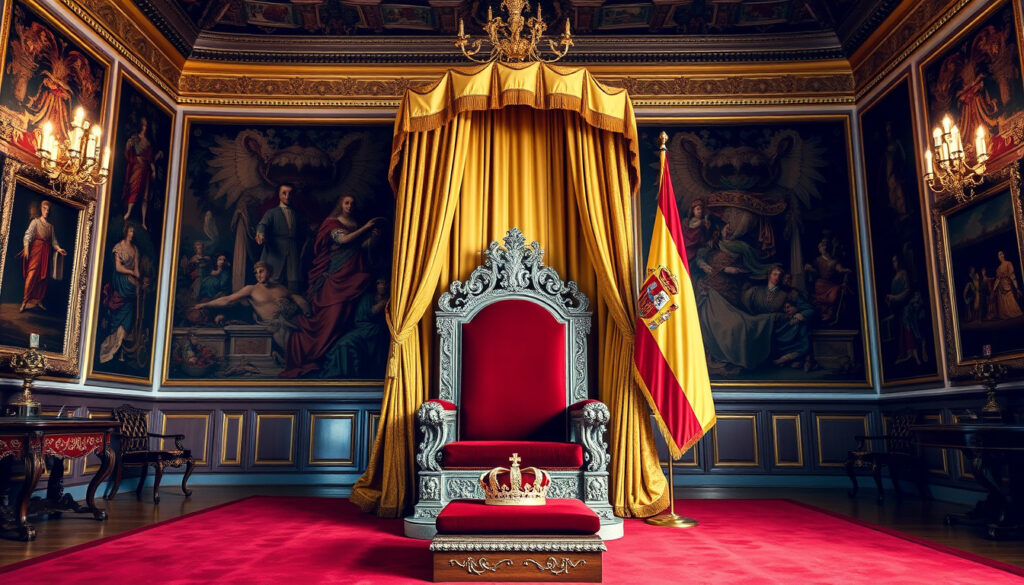
King Spain – Role, Family & History of the Modern Monarchy
When people ask about the King of Spain, they are usually referring to Felipe VI, who ascended the throne in June 2014 after the abdication of his father, Juan Carlos I. Born in Madrid on 30 January 1968, Felipe VI is the head of state in Spain’s constitutional monarchy. He is married to Queen Letizia and has two daughters: Leonor, Princess of Asturias, and Infanta Sofía.
The Spanish monarchy operates under the 1978 Constitution, which defines the king’s role as largely ceremonial and symbolic. While Felipe VI does not govern, he performs important constitutional functions such as sanctioning laws, representing the nation abroad, and acting as the supreme commander of the armed forces. Understanding what the king actually does requires looking at the specific duties outlined in law and tradition.
Who Is the Current King of Spain and What Does He Do?
The Spanish monarch is not a political ruler. The constitution places political authority in elected institutions, and the king’s acts require government countersignature. Here are several key insights about the modern monarchy:
- A Ceremonial Head of State – King Felipe VI serves as the symbol of Spain’s unity and permanence, with strictly neutral and ceremonial duties defined by the 1978 Constitution.
- Protecting the Constitution – His primary official duty is to oversee the proper functioning of state institutions, including sanctioning laws and proposing a candidate for Prime Minister after elections.
- Succession & Heirs – The heir presumptive is Princess Leonor (born 2005). She is the first female heir in modern history under the current male-preference primogeniture rules, which are expected to be reformed.
- A Turbulent Recent History – King Felipe VI has worked to distance the monarchy from scandals involving his father, Juan Carlos I, including financial investigations and the former king’s self-exile from Spain.
Key Facts About King Felipe VI
| Attribute | Details |
|---|---|
| Full Name | Felipe Juan Pablo Alfonso de Todos los Santos de Borbón y de Grecia |
| Born | 30 January 1968, Madrid, Spain |
| Spouse | Queen Letizia (m. 2004) |
| Children | Leonor, Princess of Asturias (b. 2005); Infanta Sofía (b. 2007) |
| Predecessor | King Juan Carlos I (father) |
| Official Residence | Zarzuela Palace |
| Head of State Since | 19 June 2014 |
Who Are the Members of the Spanish Royal Family?
The immediate royal family under King Felipe VI includes his wife Queen Letizia and their two daughters. The family belongs to the House of Bourbon, the Spanish royal dynasty. According to the official royal household biography, Felipe is the third child and only son of King Juan Carlos I and Queen Sofía.
The King’s Children: Leonor and Sofía
Princess Leonor, born in 2005, is the heir presumptive. She holds the title Princess of Asturias, traditionally given to the heir to the Spanish throne. Her younger sister, Infanta Sofía, was born in 2007. Both girls are being prepared for public roles, and Leonor began military training in 2023 as part of her preparation to become queen. The Princess of Asturias Foundation notes that after Felipe VI’s proclamation in 2014, the honorary presidency of the foundation passed to Leonor.
Where Does the King of Spain Live?
The official residence of the king is Zarzuela Palace on the outskirts of Madrid. Unlike some other European monarchs, the Spanish royal family does not live in the Royal Palace of Madrid, which is used for state ceremonies and official receptions. Zarzuela Palace is a more private, working residence where the king conducts daily meetings and receives visitors.
Under current male-preference primogeniture, Leonor is the heir presumptive. A constitutional reform to remove gender preference in succession has been discussed but not yet enacted. If a younger brother were born, he would become heir – but no such brother exists.
What Is the History and Lineage of the Spanish Monarchy?
The Abdication of Juan Carlos I
King Juan Carlos I played a pivotal role in Spain’s transition to democracy after the death of Francisco Franco in 1975. He famously confronted a coup attempt in 1981, which solidified his reputation as a defender of democracy. However, the later years of his reign were overshadowed by personal scandals, including financial controversies. In 2014, he abdicated in favor of his son, Felipe VI, paving the way for a new generation. After leaving Spain in 2020 amid investigations, Juan Carlos I now lives primarily in Abu Dhabi. The full legal outcome of those investigations remains pending.
King Carlos of Spain in the 1500s – Charles I of Spain
The historical figure often referred to as “King Carlos of Spain in the 1500s” is Charles I (Carlos I), who reigned from 1516 to 1556. He was also Charles V, Holy Roman Emperor. His reign marked the height of Spanish power in Europe and the Americas. Charles I inherited a vast empire that included Spain, the Netherlands, parts of Italy, and territories in the New World. He abdicated in 1556, dividing his domains between his son Philip II (who received Spain and the Americas) and his brother Ferdinand (who received the Holy Roman Empire).
Charles I’s reign established Spain as a major European power. However, the costs of constant warfare and the flood of American silver also contributed to economic challenges that would affect Spanish monarchs for centuries.
“King Carlos of Spain in the 1500s” is a simplified reference. The Spanish crown used the title “King of Spain” only formally from the 18th century onward; earlier monarchs were “King of Castile, Aragon, etc.” Charles I is often listed as the first king of a united Spain, although his rule followed the dynastic union of Castile and Aragon.
Timeline of Key Events in King Felipe VI’s Reign
- 1968 – Prince Felipe is born in Madrid. (source: Casa Real)
- 1975 – His father, Juan Carlos I, becomes King of Spain.
- 1986 – Felipe swears allegiance to the Constitution and the King in Parliament.
- 1992 – Competes in the Barcelona Olympics as a sailor. (source: public Facebook post)
- 2004 – Marries journalist Letizia Ortiz Rocasolano. (source: Study.com)
- 2005 – Birth of daughter Leonor, Princess of Asturias.
- 2014 – Felipe VI is proclaimed King after the abdication of Juan Carlos I. (source: Wikipedia)
- 2017 – King Felipe condemns the illegal Catalan independence referendum.
- 2020 – Felipe renounces inheritance from his father and cuts his father’s allowance amid corruption investigations.
Clarifying the Monarchy’s Power: Certainty vs. Ambiguity
| Established Information | Information That Remains Unclear |
|---|---|
| King Felipe VI is the current head of state. | The exact influence the king can exert privately behind the scenes is a subject of debate. |
| The Spanish monarchy is a constitutional monarchy under the 1978 Constitution. | The full extent of legal proceedings against Juan Carlos I and his long-term impact on the monarchy are ongoing. |
| The king’s official duties are ceremonial: representing Spain, sanctioning laws, and acting as Captain General. | The final date of Leonor’s ascension to the throne is unknown (dependent on Felipe VI’s lifespan). |
| The heir presumptive is Leonor, Princess of Asturias. | The timeline for constitutional reform on male-preference primogeniture is uncertain. |
The Spanish Monarchy in Historical and Political Context
The modern Spanish monarchy was restored in 1975 after decades of dictatorship under Francisco Franco. King Juan Carlos I played a pivotal role in the country’s transition to democracy, famously confronting a 1981 coup attempt. However, his later reign was marred by personal scandals, leading to his abdication in 2014. King Felipe VI has focused on restoring the institution’s reputation through transparency and strict neutrality.
While the public role is largely symbolic, the monarch retains the constitutional power to be the “arbitrator and moderator” of state institutions – a role that became politically significant during the Catalan independence crisis. The younger generation, particularly Princess Leonor, is seen as the future of the institution, embodying a modernized image of the Spanish monarchy.
Sources and Credibility for Information About the Spanish Monarchy
The most authoritative source for the king’s official activities and duties is the official website of the Royal Household (Casa de Su Majestad el Rey). The Spanish Constitution of 1978, Title II on the Crown, defines the constitutional role, powers, and succession. For recent events and public perception, high-authority Spanish news outlets such as El País and El Mundo are reliable. Internationally, the BBC and Britannica provide well-sourced profiles and timelines. Wikipedia, while editable by users, is frequently updated and cites official and journalistic sources for monarch-related articles.
For biographical details, the official biography is the primary source. The Princess of Asturias Foundation also provides information about the king’s preparation for the throne.
What Is the Future of the Spanish Monarchy?
The monarchy under Felipe VI appears stable, with a focus on transparency and modernisation. Princess Leonor’s military training and gradual assumption of official duties indicate a smooth succession plan. However, the institution faces ongoing challenges: public opinion trends, the resolution of legal cases involving Juan Carlos I, and potential constitutional reform on primogeniture will shape its long-term relevance. For now, the king remains a respected but constrained figurehead in Spain’s democratic system.
Frequently Asked Questions About the King of Spain
When did King Felipe VI become king?
He became king on 19 June 2014, following the abdication of his father, King Juan Carlos I.
Does the king of Spain have any real power?
The King of Spain is a ceremonial head of state. His powers are strictly defined by the constitution and are largely symbolic, such as sanctioning laws and representing the nation.
Who will be the next king of Spain?
The next monarch will be Princess Leonor, the daughter of King Felipe VI. She is the heir presumptive.
What is the Queen of Spain’s name?
The Queen of Spain is Queen Letizia.
How old is King Felipe VI?
He was born on 30 January 1968, making him 58 years old in 2026.
Related Articles
King Size Bed with Storage – Complete UK Buyer’s Guide 2025
Victoria Beckham Husband Knighthood – What Title She Gets Now
More related posts
 Weston Super Mare Beach – Ultimate Visitor Guide
 Months Of The Year – Complete Guide to Order, Days and Songs
 Michelle Randolph Movies and TV Shows – Full List and Facts
 Yorkshire Pudding Recipe UK – Foolproof & Traditional Guide
 How to Connect PS5 Controller – To Console, PC and Mobile
 Scotland National Football Team Standings – 2024 Nations League Table
 Cast of We’re the Millers – Full Main Actors and Characters Guide
 Logan Paul – Net Worth, Wife and WWE Career in 2025
